
Malnutrition is one of the greatest global health challenges, and has significant impacts on millions of people around the world. Undernutrition in particular, one of three types of malnutrition, is the underlying contributing factor in nearly half of the deaths of children under five years of age.
Malnutrition can lead to a weakened immune system, meaning children are more vulnerable to disease. These diseases can lead to further malnutrition, creating a vicious cycle of illness.
MSF first introduced specific therapeutic foods to treat malnutrition on a large scale as long ago as 2005, and they have been used widely used since. However, access to key nutrients remains one of the major challenges in reducing deaths in children due to acute malnutrition, especially in conflict-affected countries.
How is MSF responding to malnutrition?
Providing nutrition care through nutrition programs has been one of the core medical activities of MSF since it was founded in 1971.
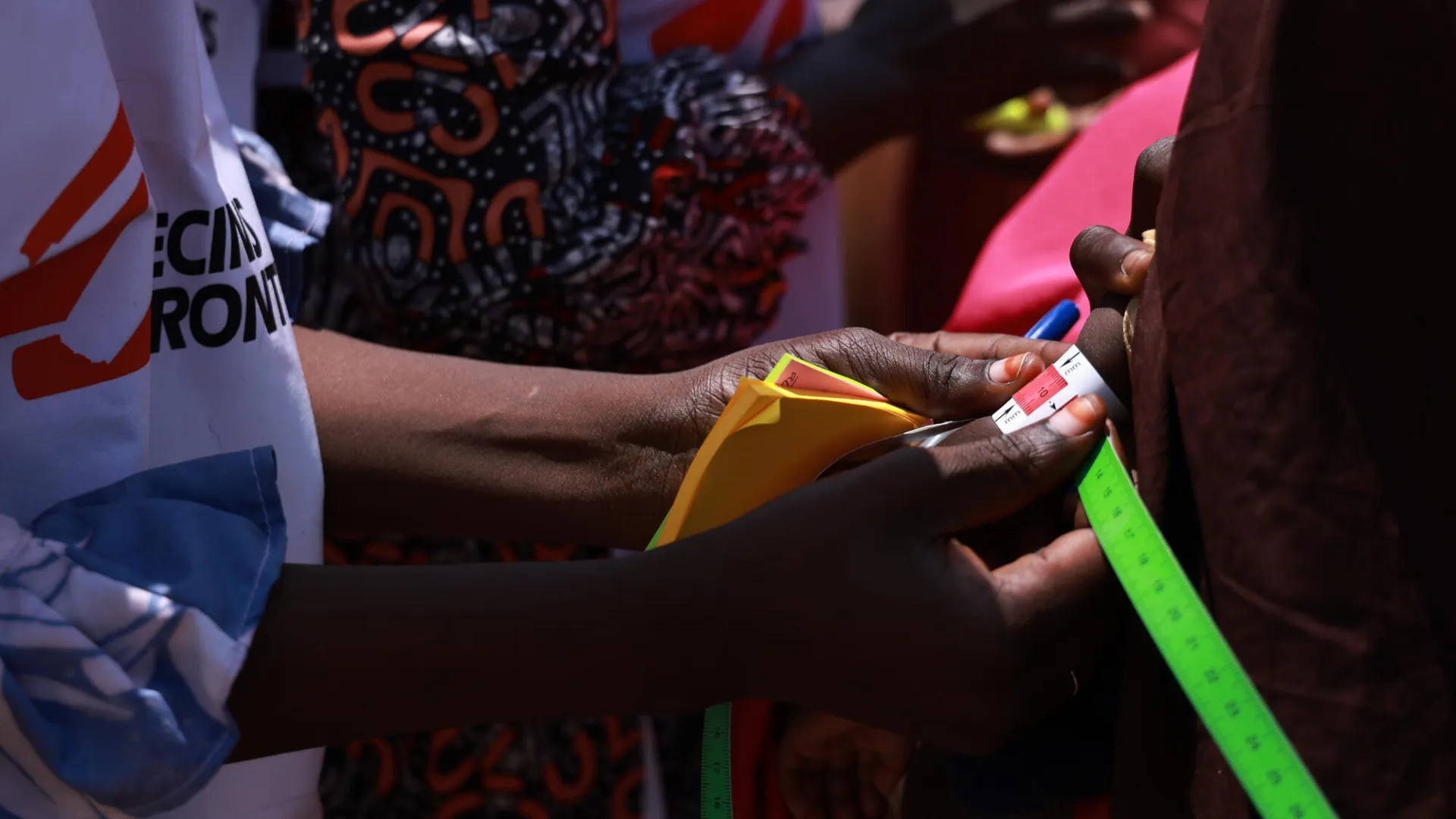
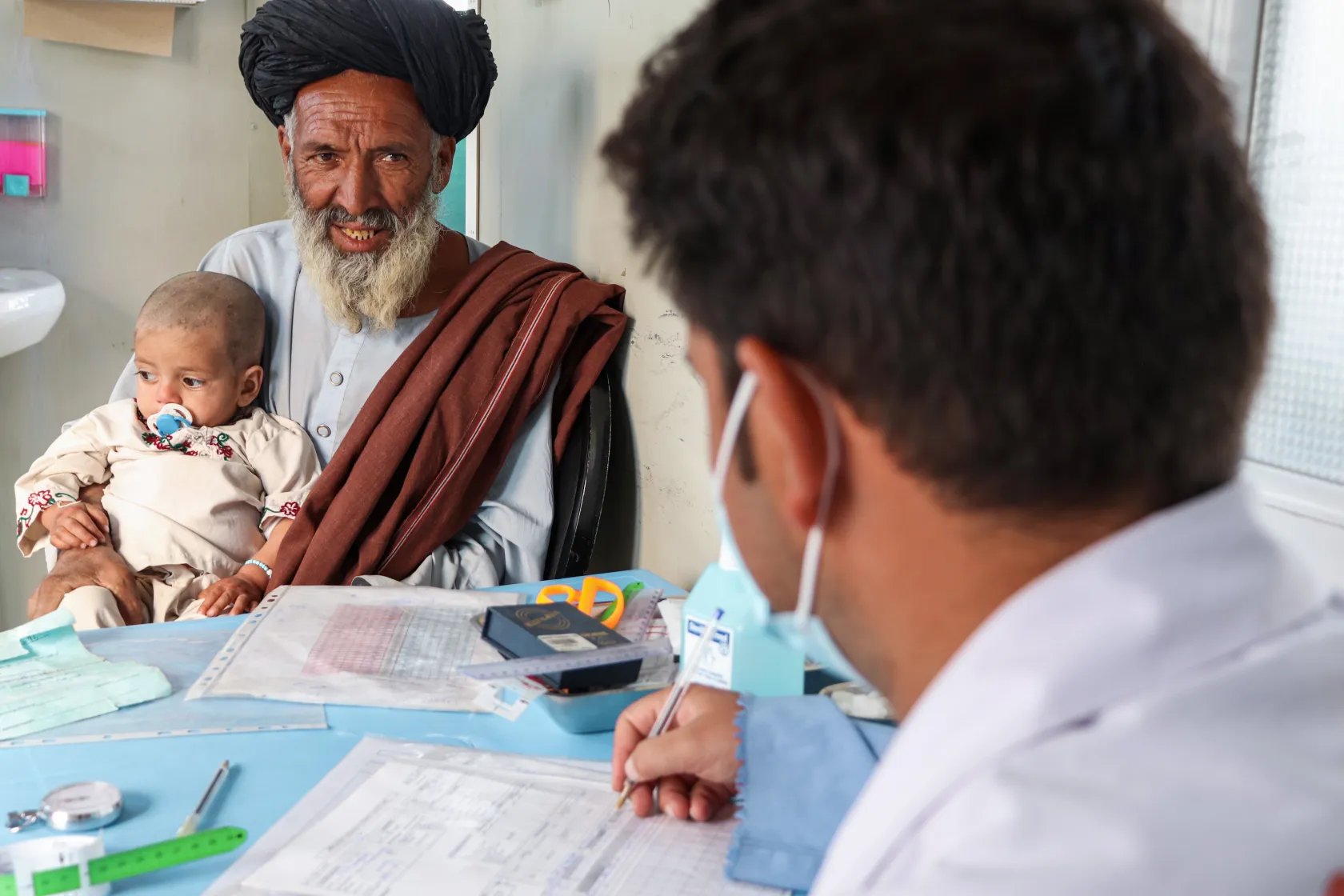
MSF conducts community-wide nutritional assessments to identify the extent of acute malnutrition and systematic assessments as part of almost all of our outpatient and inpatient services. Our teams assess children by comparing their weight-for-height ratio to international WHO standards, and/or by measuring a child’s mid-upper-arm circumference (MUAC) using colour-coded paper bracelets. MUAC measurements are simple enough to be used at a village level by community health workers, and parents of children. We also use an adult version of the MUAC for pregnant and breastfeeding women and girls and other at-risk adults.
The widespread use of ready-to-use therapeutic food (RUTF)—a product that can be stored long-term without refrigeration and contains a specific balance of nutrients—allows us to more effectively treat acute malnutrition and prevent a child’s condition from becoming more severe. We use RUTF in complement to medical care, and adapt our care depending on whether a child has medical complications or not. RUTF is typically a peanut-based paste. The majority of children can be treated at home by their family with follow-up appointments at a clinic. This strategy can result in cure rates of more than 90 per cent and reduce referral to inpatient care.
In some regions we scale up or open new therapeutic feeding centres ahead of the pre-harvest lean season, when acute malnutrition is on the rise. We also strengthen basic healthcare including preventive activities like vaccinations and malaria chemoprophylaxis. Another important activity is working with communities to raise awareness of malnutrition and contribute to monitoring and prevention where possible.
Is malnutrition getting worse?
Food insecurity has worsened in many countries in 2024 due to conflict, economic and financial crises and climate disruption, as well as a crisis in the resources needed to deal with these issues.
The nutrition crisis in countries such as Nigeria, Niger, Chad and DRC has continued to worsen in the past year. MSF has witnessed record-high admissions in some of its facilities, and we have increased our response to allow us to screen and treat more patients. But the crisis cannot be solved with our medical action alone.
We have urgently scaled up our nutrition-related activities across many projects to help prevent and treat severe acute malnutrition, but greater support is still needed for the most affected: children under five, and pregnant and breastfeeding women and girls.
Where is MSF responding to malnutrition?
MSF teams respond to acute malnutrition and associated ill health in many communities around the world. Here are some of our current responses in areas of the greatest need:
Sudan
The ongoing conflict in Sudan, which has displaced more than 10 million people, has been the main driver of the current malnutrition crisis. Violence continues to severely disrupt food production and distribution, shatter livelihoods, and decimate the healthcare infrastructure. As people have fled to neighbouring areas, there are increasing demands on essentials like food and water in these regions as well, further expanding the crisis.
The catastrophic and life-threatening malnutrition crisis in Zamzam displacement camp in north Darfur—home to more than 450,000 refugees—has been growing as the war continues. To provide emergency rations (a mere 500 calories per day) to each person would require 2,000 tonnes of food. At a time when help is needed the most, there isn’t enough to go around.
Following the devastating results of a rapid nutrition and mortality assessment conducted by MSF in early January 2024, MSF estimated that a child was dying of causes linked to malnutrition every two hours on average. A follow-up rapid nutrition and mortality survey of 46,000 children under five, carried out by MSF in Zamzam camp in March-April 2024, demonstrated that all emergency thresholds for acute malnutrition had been reached, with more than 30 per cent of children suffering from acute malnutrition. An additional MSF malnutrition assessment in September 2024 with a smaller group of 29,000 children under five found that more than 34 per cent were acutely malnourished.
The malnutrition rates found during the screening are massive. They are likely some of the worst ones currently in the world.
Despite the massive need, at the end of September 2024 MSF was forced to stop care for 5,000 children in Zamzam camp, including 2,900 children with severe acute malnutrition. The supplies we had been able to transport in at that time were simply not enough to meet the extreme demand. Only MSF's 80-bed hospital remained functioning in the camp to treat children in the most critical condition—a drop in the bucket of need. Fortunately, in early November we were able to resume our outpatient treatments thanks to a much-needed delivery of therapeutic food supplies via two MSF lorries. But despite the reprieve, there is still much to do to adequately address this desperate situation.
MSF is calling on all diplomatic stakeholders involved in access negotiations, the allies of the warring parties, the Rapid Support Forces, the Sudanese Armed Forces and the Joint Forces, to facilitate the delivery of lifesaving humanitarian aid to the camp.
Nigeria
The persistent malnutrition crisis in northern Nigeria stems from a variety of factors: inflation, food insecurity, insufficient healthcare infrastructure, ongoing security issues, and disease outbreaks have all contributed to the current malnutrition crisis.
MSF currently runs four inpatient and 17 outpatient therapeutic feeding centres in the local government areas of Shinkafi, Zurmi, Gummi and Talata Mafara in Zamfara. These facilities are dedicated to the treatment of acute malnutrition and essential medical care in children under five, with outpatient care in ambulatory (walk-in) therapeutic feeding centres (ATFC), and inpatient care in inpatient therapeutic feeding centres (ITFC).
Across our four inpatient facilities, MSF teams have treated over 7,000 children from January to July 2024, a figure 34 per cent higher than for the same period in 2023. In Shinkafi and Zurmi, where MSF conducted the recent malnutrition screening, the increase in admissions is 50 per cent more than the same period last year. At the medical facility in Gummi, admissions in July 2024 were almost double compared to the same month last year.
We've been warning about the worsening malnutrition crisis for the last two years. 2022 and 2023 were already critical, but an even grimmer picture is unfolding in 2024. We can't keep repeating these catastrophic scenarios year after year. What will it take to make everyone take notice and act?
A mass screening conducted in June 2024 by MSF and the Ministry of Health found that one out of every four children under the age of five is malnourished in the Shinkafi and Zurmi regions. Of the 97,149 children screened in 21 different urban and rural locations, 27 per cent were found to be suffering from acute malnutrition, with five per cent of those having severe acute malnutrition. These concerning figures far exceed the critical level threshold established by the World Health Organization (WHO) regarding malnutrition prevalence.
The catastrophic nutritional situation seen in recent years in northern Nigeria calls for a bigger response—much greater than what MSF can provide alone. And yet, despite the alarming situation, the overall humanitarian response remains inadequate.
Will you support us?
As an independent, impartial and neutral medical humanitarian organisation, Médecins Sans Frontières can respond rapidly to emergency situations and deliver urgent medical treatment to people in need, no matter where they are.
By making a donation, you can help ensure that MSF staff can provide medical assistance during times of crises where it is needed most around the world.


